
Platinum-Coated Titanium Mesh: Properties, Uses, and Reference Electrode Applications
Have you ever wondered how a modern swimming pool stays sparkling clean with less of that harsh chemical smell? The secret often lies not in a new liquid, but in a remarkable material: platinum-coated titanium.
This advanced material combines the strength of titanium with the durability of platinum. It enables technologies for water purification and clean energy. It answers an important engineering question: how do you make something very strong and perfect for its use?
Why You Can’t Just Use Titanium or Platinum Alone
While strong, titanium has a surprising weakness. When used as an anode, it works hard in an electrical circuit. In tough environments like saltwater, it slowly corrodes because of electricity. Over time, it forms a non-conductive crust, like a tool that gets hopelessly rusted after being left out in the rain.
So, why not use solid platinum? The simple answer is cost. Platinum is one of the rarest metals on Earth. Making large industrial parts from it would cost a lot. It’s like trying to build a family car out of solid gold—not practical for most applications.
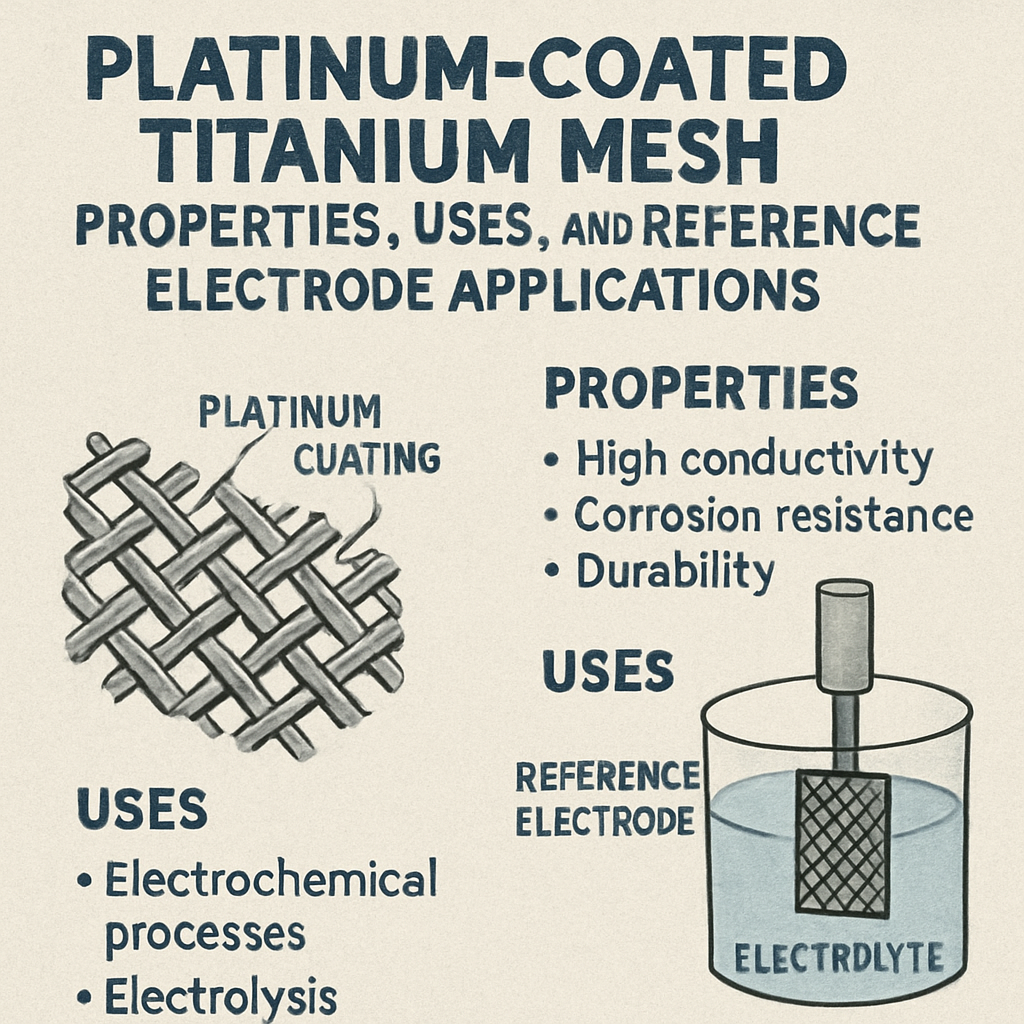
By covering a strong and affordable titanium mesh with a tiny layer of platinum, you get the best of both worlds. The titanium gives a strong and affordable structure. The ultra-thin platinum coating provides a perfect, corrosion-proof surface to complete the job. This clever design creates a powerful and long-lasting material ready for amazing tasks.
How This Mesh Uses Electricity to Clean and Create
This material is the main part of a process called electrolysis. This process uses electricity to split molecules and make new substances. It triggers a chemical change on demand without adding new ingredients.
When this mesh is placed in water, an electrical current is applied. The platinum surface provides a safe and non-corroding area. This allows the reactions to happen efficiently. The titanium mesh anode for electrolysis can work for years, turning simple saltwater or mineral water into something useful.
You can find this smart science at work in devices you might already know:
- Advanced Water Purifiers and Ionizers: The mesh serves as the main electrodes for water ionizers. It changes the water’s properties to create alkaline or acidic water.
- Modern “Saltwater” Pool Systems: These systems use a small amount of salt to create natural chlorine. This keeps the water clean and clear without harsh chemicals.
Why This Smart Science Matters for the Future
A strong frame made of titanium and a powerful, corrosion-resistant surface of platinum create a “super material”. You can see how these materials work together. This material is a durable tool for today’s industry.
The next time you hear about ‘green hydrogen’ or advanced water purifiers, you’ll recognise the principle at work. These technologies require a high-current-density anode material that leverages platinum’s unique electrocatalytic activity to drive reactions efficiently.
For more information Please visit: SAVEIONS LTD